Thamar University Concludes Specialized Training Program for 120 Participants from Sub-Teams on the Code of Conduct and Ethics of University Work
□ Thamar University Media / Jamal Al-Bahri / Rajab 8 1447. December 29, 2025
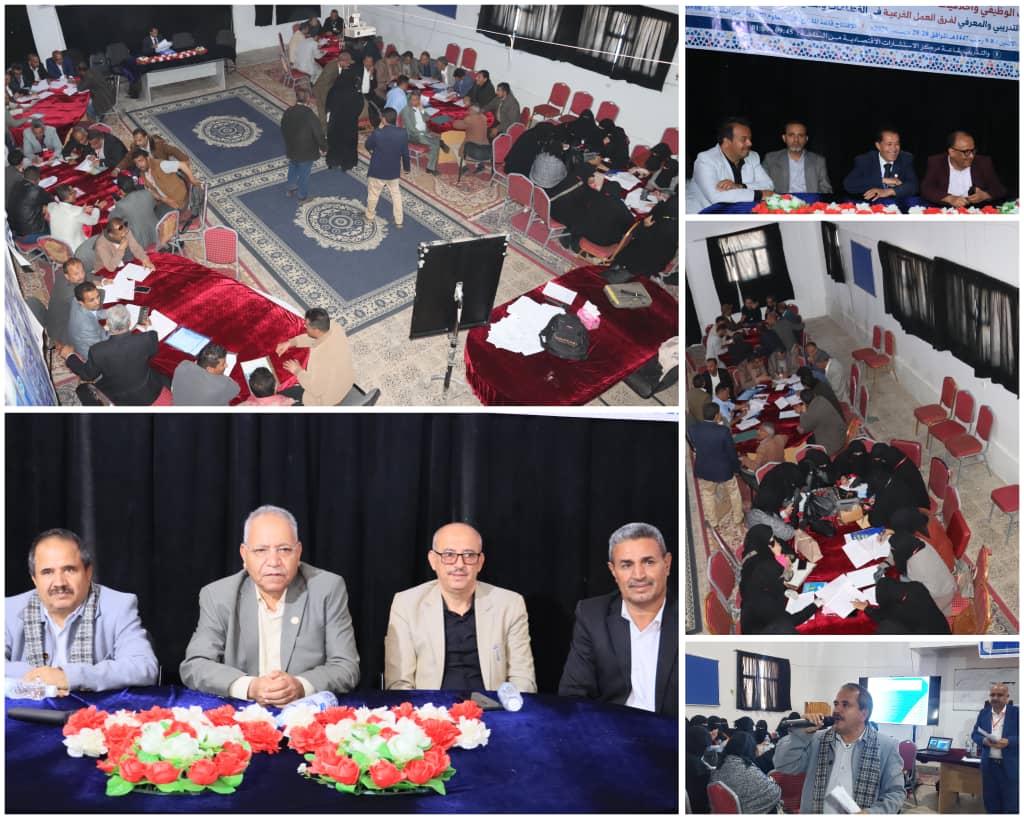
■ Thamar University concluded today, at the Center for Economic Studies, Consultations and Administrative Training, a specialized training program on the Code of Conduct and Ethics of University Work.
The program was attended by 120 participants representing sub-teams from various sectors, colleges, institutes, and units within the university. This initiative is a part of an institutional approach aimed at strengthening the values of integrity and responsibility and establishing the principles of discipline and transparency within the university work environment.
The program concluded under the patronage of Professor Dr. Mohammed Mohammed Hassan Al-Haifi, the Rector of Thamar University, and in the presence of Professor Dr. Abdulkafi Al-Rifai, the Vice-Rector for Student Affairs, Professor Dr. Adel Abdulghani Al-Ansi, the Vice-Rector for Academic Affairs, the Dean of the Center for Academic Development and Quality Assurance, and Dr. Mohammed Hutram, the University's General Secretary.
The high-level attendance reflected the leadership's strong interest in the program and its outcomes, recognizing it as a key pillar in developing institutional performance and promoting responsible professional conduct.
At the closing ceremony of the training program, organized by the Center for Academic Development and Quality Assurance and the University's Code of Conduct team, the University Rector commended the significant efforts of the main Code team and the Center for Academic Development team in its preparation, implementation, and follow-up.
He also praised the commitment and engagement of the trainees from the sub-teams across the University's various sectors, colleges, institutes, units and centers. He affirmed that the University is steadily progressing in the comprehensive implementation of the Code's rules and standards to ensure the achievement of its objectives, improve the quality of university services, and enhance institutional trust.
Professor Dr. Adel Abdulghani Al-Ansi led the program sessions, introducing and commenting on its themes, and facilitating the scientific and practical discussions that accompanied the training days. The head of the main teams and their members in the Code of Conduct program were responsible for training, educating and raising awareness among the trainees from the sub-teams. The program focused on translating the Code's concepts from a theoretical framework into practical applications applicable to the daily work environment within the university's units.
The program's scientific themes addressed several fundamental issues related to professional conduct. Dr. Ahmed Saleh Al-Furasi presented topics related to individual and collective responsibilities, the obligations of public service units towards employees and the community, as well as the general and personal responsibilities of employees, the responsibilities of superiors and subordinates and professional relationships within the work environment, supporting his presentations with practical application examples.
Mr. Mohammed Al-Khawlani also presented a specialized module on data handling, information and document confidentiality and the regulations governing the use of information and communication technology.
In another session, Dr. Ahmed Mosaad Al-Hadi, the Dean of the College of Education, reviewed the appendix to the Code of Conduct for Faculty Members, addressing the general principles and values of the university teaching profession, the relationship of the university professor with students, colleagues, the university, and the community and their role in scientific research, community service and professional development, thus enhancing the status of faculty members as models of ethical and responsible conduct.
Mr. Abdulrazzaq Ali Al-Ofairi, the Head of the University's Code of Conduct Team, addressed the topic of evaluating the implementation of the Code and measuring its impact. He explained the mechanisms for self-assessment and comprehensive evaluation according to the approved models, the team's work program, and the implementation matrix for completing the Code's implementation project.
He also linked this to performance indicators such as the speed of service delivery, the percentage of complaints, the reduction of behavioral deviations, increased employee productivity, the establishment of mutual trust, and the rational use of resources. Furthermore, he discussed recognizing outstanding individuals and holding those who fall short accountable based on the evaluation results.
The event also featured a presentation by Amat Al-Karim Al-Washali, a member of the governorate's code of conduct team, who emphasized the importance of transforming the code of professional conduct into a daily commitment and practical application within public service units. This, she explained, contributes to building an institutional culture based on values and responsibility.
At the conclusion of the program, which included several insightful contributions and positive interactions, the training course outcomes were reviewed, and certificates of appreciation were distributed to the participants. This served as a practical demonstration of Thamar University's commitment to developing its human resources, strengthening its professional values and enhancing institutional performance to benefit both the educational process and the community.