2026-07-11
Thamar University Organizes a Cultural and Intellectual Symposium Entitled "Guides of Guidance: A Renewed Project of Jihad"
□ Thamar University Media | Muharram 26, 1448. July 11, 2026
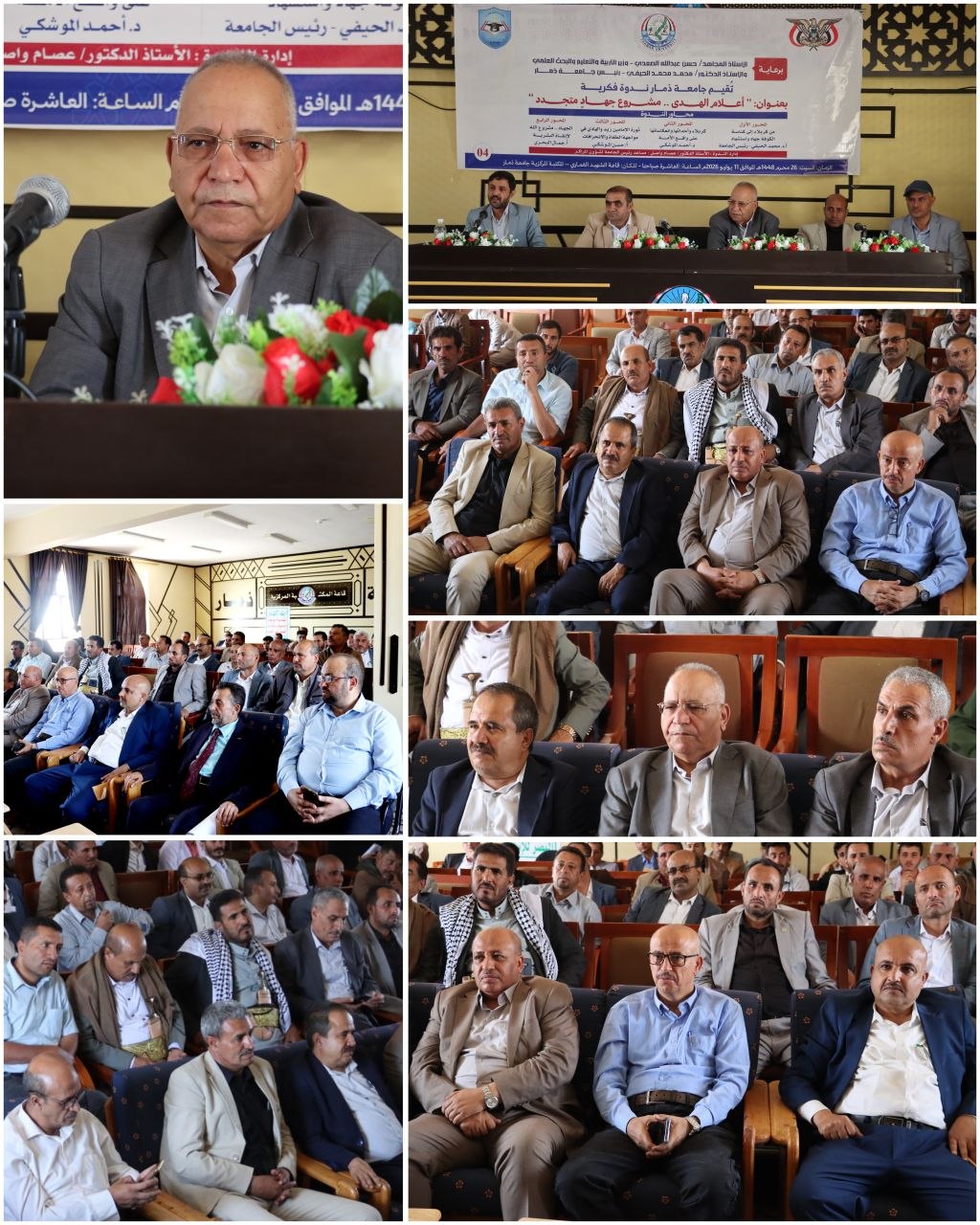
■ Thamar University, in cooperation with the University Student Forum, organized a cultural and discussion symposium today, Saturday, entitled "Guides of Guidance: A Renewed Project of Jihad." The symposium was held under the patronage of the Minister of Education and Scientific Research, Mr. Hassan Abdullah Al-Saadi, and the University Rector, Professor Dr. Mohammed Mohammed Al-Haifi, and in the presence of university leaders and members of the academic and administrative staff.
Among those in attendance were the Vice-Rector for Student Affairs, Professor Dr. Abdulkafi Al-Rifai, the Vice-Rector for Graduate Studies and Scientific Research, Professor Dr. Abdulkarim Zabiba, the Vice-Rector for Academic Affairs, Professor Dr. Adel Abdulghani Al-Ansi, the University General Secretary, Dr. Mohammed Hutrum, as well as a number of deans and their deputies, department heads, directors general, and university staff.
The symposium, moderated by the Rector's Assistant for Centers Affairs, Professor Dr. Essam Wasel, addressed four intellectual themes presented by several university leaders. These themes focused on analyzing a number of pivotal moments in Islamic history and jihad, exploring their associated intellectual and cultural dimensions, as well as discussing their repercussions on the contemporary reality of the Muslim world.
In the first paper, titled "From Karbala to the Sewage of Kufa: Jihad and Martyrdom," the University Rector, Professor Dr. Mohammed Mohammed Al-Haifi, presented a historical sequence of events related to the martyrdom of Imam Hussein on the Day of Ashura in Karbala, and the subsequent developments leading up to the martyrdom of his son, Imam Zayd ibn Ali ibn Hussein, in the sewage of Kufa. He discussed the significance of these events in Islamic and human thought, considering them a model for confronting injustice and Umayyad tyranny, and the deviations it represented, which aimed to undermine the Muslim community from within.
The second paper, titled "Karbala: Its Events and Repercussions on the Reality of the Nation," was presented by Dr. Ahmed Al-Mawshki. It discussed in depth the religious, intellectual, and political dimensions of the Karbala tragedy, addressing its impact on shaping Islamic consciousness and the presence of these events in contemporary intellectual and cultural discourse.
In the third paper, "The Revolution of Imams Zayd and Al-Hadi Against Tyranny and Deviations," Hassan Al-Mawshki, the university Rector's Consultant for Cultural Affairs, examined the historical circumstances surrounding the revolutions of Imams Zayd Ibn Ali and Al-Hadi ila Al-Haqq Yahya iIbn Al-Husayn. He reviewed the motivations behind these revolutions and their humanitarian and jihadist objectives in confronting the political and intellectual deviations of that era.
The symposium concluded with a paper presented by Mr. Jamal Al-Bahri, the Head of Media and Public Relations Department, entitled "Jihad, God's Project to Save Humanity." In his presentation, he addressed the concept of jihad from a Quranic perspective, beginning with the struggle against one's own desires and culminating in jihad with one's life. He explored the meanings and dimensions of jihad, distinguishing between its types and levels, and highlighting its intellectual, ethical, and military aspects.
He also emphasized the connection between jihad and the values of justice and the defense of society. At the end of his presentation, he offered a reading of the book "Jihad" by the martyred Imam Ali Al-Husseini Al-Khamenei.
The symposium witnessed active participation from attendees regarding the issues raised in the working papers presented as part of the cultural program implemented by Thamar University during the academic year 1448.
This symposium (the fourth in a series of cultural seminars organized by the university) was held in the Martyr Al-Ghumari Hall at the Central Library.